Medicine across three continents — from Harvard research to clinical practice.
Physician, endocrinologist and educator with 25+ years of international experience and several health systems seen from the inside — practising within the German healthcare system and sharing medicine with a global audience.
Internal MedicineEndocrinology & DiabetologyPublic HealthMedical Educator
🇪🇺Why Europe? — Paperback & E-Book bei Amazon.de
🇩🇪Warum gerade Deutschland? — Buch bei Amazon.de

A physician shaped by three continents
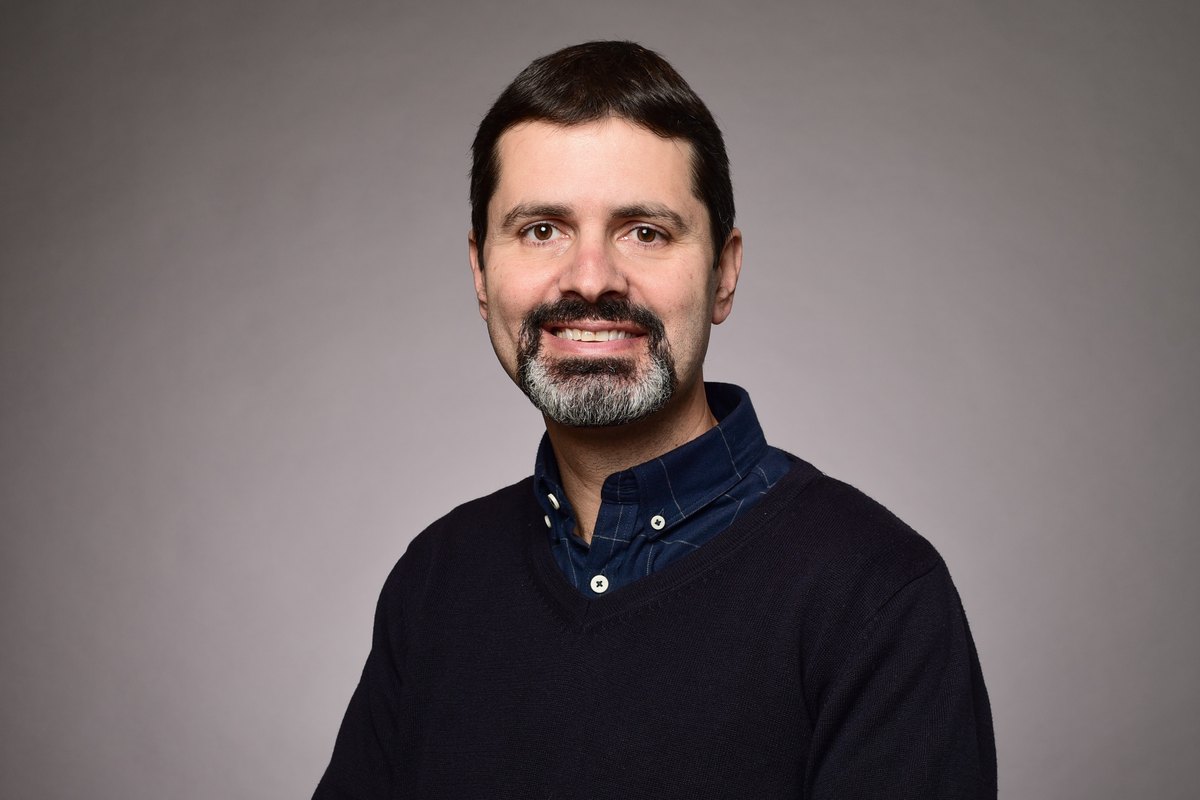
Dr. Alberto Arbex is a physician, medical educator, and researcher with more than 25 years of experience — a clinician who has also taught medicine to practising physicians and pursued research alongside his clinical work.
From 2012 to 2018 he brought more than 500 resident physicians to courses at Harvard, where he served as a Visiting Scholar in 2014. He is the author of four technical books published with Editora Rubio in Brazil, and today he runs his own clinic in Flensburg, northern Germany, working within the German healthcare system in endocrinology and diabetes care.
Drawing on a life lived across languages, countries, and medical systems, he writes for a broad international readership — reaching colleagues, students, and patients across cultures, from Europe and the Americas to South Asia and beyond.
The story, and what comes next

Warum gerade Deutschland?
Eine persönliche Geschichte über Medizin, Mut und den Weg in das deutsche Gesundheitssystem
Wie ein international erfahrener Arzt seinen Platz in der deutschen Medizin fand — eine Geschichte über Lernen, Wandel und die Entscheidung für das deutsche Gesundheitssystem.

Why Europe?
A memoir of reinvention, belonging, and Europe seen from the inside
A doctor leaves an established life to start over abroad — raising a family between languages and discovering what belonging means. With a clear-eyed, insider’s view of the health systems of Germany, Denmark, and Switzerland, it asks what Europe truly is once you live inside it. Fully edited by Jim Gifford (editor of Tara Westover’s Educated); preface by the Mayor of Flensburg.
🇪🇺Paperback & Kindle — Amazon.de →🇧🇷E-book Kindle — Amazon.com.br →🇧🇷Livro impresso — Amazon.com.br →
Insights on medicine, public health & society
A newsletter from inside the German healthcare system, written for an international readership. The latest pieces are here in full; click any title to read.
The Weight-Loss Injection Costs €300 a Month Elsewhere. In Germany, the State Pays this Bill.
Patients in Germany with type 2 diabetes walk out of their doctor’s practice with a prescription for weight-loss injections. No private insurance. No out-of-pocket cost. Covered by statutory health insurance, like any other evidence-based treatment.
I have been practising medicine in Germany for several years now. And this still surprises me. When I describe to colleagues in Brazil, the United States or the Gulf region that German patients with type 2 diabetes receive tirzepatide through their public insurance, there is a pause on the other end of the call. In most countries these medications sit behind a price wall — several hundred euros a month, paid privately, or simply not an option. In Germany, the Solidargemeinschaft covers it. That is remarkable, and I think we do not say it enough.
The evidence that got us here
This did not happen by coincidence. The STEP trial series on semaglutide documented outcomes well beyond weight reduction; tirzepatide followed with the SURMOUNT series. The evidence has since expanded — knee osteoarthritis, ovulatory function in PCOS, smoking cessation, and, decisively, a 20% reduction in major cardiovascular events in non-diabetic patients with overweight or obesity (SELECT). That last finding is not a lifestyle outcome. It is a mortality outcome.
A system worth defending
The question now discussed inside the G-BA and clinical societies is whether coverage should extend to all patients with obesity, not only those with type 2 diabetes. When a molecule demonstrably reduces cardiovascular mortality in a large insured population, the actuarial logic resolves itself. The German system is not perfect. But its willingness to incorporate evidence-based treatments at scale is worth recognising.
Stop Counting Babies. Start Counting Robots.
At a conference not long ago, I sat through a familiar presentation: declining birth rates, aging societies, migration as salvation, fertility targets as national strategy. The data was impeccable. And I kept thinking — we are solving for a problem that will not exist in the form we imagine it.
Because the robots are coming, in a “months from now, this will be normal” sense. We already have AI managing scheduling, documentation and triage; robotic platforms performing surgery; care robots working overnight shifts in Japanese nursing homes. The question no one in the fertility debate is asking: if one person can direct 1,000 robots, why do we need 1,000 additional humans to fill that labour gap?
I run a medical clinic in northern Germany. The caregiver shortage is real and not solvable through immigration at the speed we need. A robot does not need a visa, does not burn out, does not call in sick. Longevity, meanwhile, is rewriting the social contract: we replace hips, knees, hearts. An 80-year-old with a functioning heart, replaced joints and cognitive clarity is not the burden the old models assumed.
The societies that thrive will not be those with the highest birth rates, but those that understood early that the workforce of the future is a human-machine combination. The demographers have the right data. They are asking the wrong question — not how do we produce more people, but what kind of society do we want to build with the people, and the machines, we will have.
“Frische Luft”: The Advice That Arrived Before the Evidence
A patient tells me, almost proudly: “I’ve been eating much less meat lately. I think that’s why I’ll get better.” I nod, and inside I’m thinking about 1887 — the year Germany’s first Reformhaus opened its doors.
The Lebensreform was born in the late 19th century as a reaction to industrialisation. Its prescriptions were straightforward: eat less meat, more plants and whole grains, move, get sunlight, breathe fresh air. When a German patient tells me they’re cutting out meat to get healthier, they usually aren’t quoting a study — they’re echoing something absorbed over generations.
There is something beautiful in this tradition. But in endocrinology I see a recurring problem: patients with insulin resistance or sarcopenia eating less protein than they need, because they believe they are being healthy. Adequate protein, including from animal sources, is critical for preserving muscle, improving insulin sensitivity and supporting recovery. The villain is rarely a lean cut of meat — it is ultra-processed food, refined carbohydrates and inactivity. The window is open. Now let’s update what we know.
 Dr. Alberto Arbex